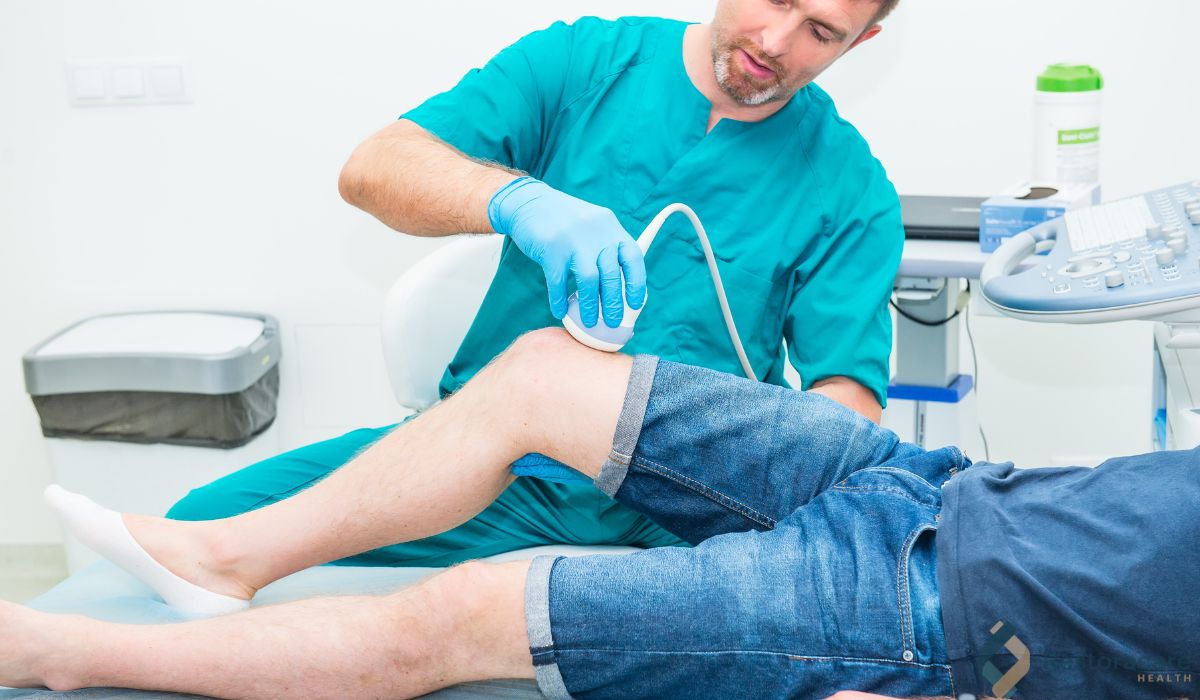


Did someone recommend you to undergo ultrasound therapy and made you think about how it could help you? In this short guide, we’ll explain some ultrasound therapy applications in Toronto so you’ll have a better idea of its benefits. A quick trivia first though, did you know that the first documented and published use of ultrasound began in 1958? Ian Donaal and his team used it as a diagnostic tool.
Today, ultrasound has expanded into physiotherapy. Its therapeutic applications have been revolutionizing physiotherapy and rehabilitation for decades. We have sports sports injury rehabilitation with ultrasound therapy for example.
By the way, ever wondered about the professional practice in ultrasound therapy? We covered the certifications and training that a typical physiotherapist goes through to be hired by a reputable clinic in Toronto.
Short Summary
- Ultrasound therapy utilizes sound waves at specific frequencies to penetrate tissue, stimulate healing, and reduce pain in a non-invasive manner.
- Ultrasound therapy provides a non-invasive approach to pain management for chronic conditions and acute injuries.
- Beyond pain management, ultrasound is explored for accelerating tissue healing and stimulating nerves.
What Is Ultrasound Therapy And How Does It Work?

Ultrasound therapy involves using ultrasound waves for therapeutic benefit. This form of treatment employs ultrasound energy to stimulate tissue healing and alleviate pain. But how does it work exactly? A device, often an ultrasound wand, emits sound waves at specific frequencies. These waves penetrate the tissue, creating effects that promote healing and reduce discomfort. It’s a non-invasive way to target problem areas beneath the skin.
Difference Between Diagnostic And Therapeutic Ultrasound Frequencies
While both diagnostic and therapeutic ultrasound use ultrasound waves, they operate at different frequencies. Diagnostic ultrasound imaging, for instance, uses higher frequencies to create detailed images of internal structures. Therapeutic ultrasound, on the other hand, typically uses lower frequencies. These lower frequencies are better suited for deeper penetration and the delivery of ultrasound energy to promote tissue healing.
Therefore, the choice of frequency is crucial in determining the application and effect of the ultrasound treatment.
Physics Behind Sound Wave Penetration And Tissue Heating
The ability of ultrasound waves to penetrate tissue depends on several factors rooted in physics. As sound waves travel through biological tissue, they lose energy through absorption. This absorption leads to tissue heating. Ultrasound frequency, tissue density and angle of incidence all play a role in how deeply the waves can reach. Moreover, reflection and refraction of the ultrasound beam at tissue interfaces also affect penetration.
Thermal Vs. Non-Thermal Effects On Cellular Structures
Ultrasound therapy produces both thermal (heat-related) and non-thermal effects on cells. Tissue heating, caused by absorbing ultrasound energy, increases blood flow and reduces muscle spasms. However, non-thermal effects, such as cavitation (formation of bubbles) and acoustic streaming, also play a crucial role. These non-thermal effects can stimulate cell membranes and promote tissue healing without significant tissue heating.
Ready to Feel Better?
Equipment Types And Transducer Specifications
Various types of equipment are used in ultrasound therapy, each designed for specific applications. The main component is the ultrasound device with a transducer or ultrasound probe that emits the sound waves. Transducers come in different sizes and shapes to target different areas of the body. Specifications include frequency, intensity, and the type of ultrasound (continuous or pulsed).
Safety Parameters And Contraindications
While generally safe, ultrasound therapy has safety parameters and contraindications. Ultrasound exposure should be carefully controlled to avoid excessive tissue heating or damage. Certain conditions, such as pregnancy, blood clots, or active infections, may contraindicate the use of ultrasound therapy. Also, it’s important to avoid applying ultrasound over areas with impaired sensation or metal implants.
Pain Management Applications of Ultrasound Therapy

Ultrasound therapy is frequently used in clinical practice to alleviate various types of pain. From chronic conditions to acute injuries, the therapeutic applications of ultrasound offer a non-invasive approach to pain management. Physical therapy ultrasound is a common modality employed by physiotherapists in Toronto to help patients regain function and reduce discomfort.
Chronic Pain Relief Mechanisms Through Deep Tissue Heating
One of the primary mechanisms through which ultrasound therapy provides chronic pain relief is deep tissue heating. The ultrasound energy increases blood flow to the affected area, promoting tissue healing and reducing inflammation. This heat can also help to relax tense muscles and alleviate muscle spasms, contributing to a reduction in overall pain levels. For those with long-term pain, therapeutic ultrasound can be a valuable tool in managing their symptoms.
Acute Injury Treatment Protocols And Timing Considerations
In treating acute injuries, ultrasound therapy can be beneficial when used appropriately and at the right time. Initially, after an injury, reducing inflammation is crucial. Low intensity ultrasound may be used to modulate the inflammatory response without exacerbating the injury. As the injury progresses, therapeutic ultrasound can promote tissue healing and prevent scar tissue formation. Timing is critical; applying heat too soon after an injury could worsen inflammation.
Arthritis Pain Management And Joint Mobility Improvement
For individuals in Toronto suffering from arthritis, ultrasound therapy applications can provide significant relief. The tissue heating effect of ultrasound can reduce pain and stiffness in the joints, while the non-thermal effects can help to improve joint mobility. By increasing blood flow and reducing inflammation around the joints, therapeutic ultrasound can enhance the effectiveness of other treatments and improve the overall quality of life for arthritis patients.
Fibromyalgia Symptom Reduction And Muscle Relaxation
Fibromyalgia, a chronic condition characterized by widespread pain and tenderness, can also be managed with ultrasound therapy. The muscle spasms and trigger points associated with fibromyalgia can be targeted with ultrasound to promote relaxation and reduce pain. Moreover, the increased blood flow to affected tissues can help alleviate some of the symptoms of fibromyalgia, offering patients a non-pharmacological approach to pain management.
Post-Operative Pain Control Strategies
Following surgery, pain management is a critical aspect of recovery. Ultrasound therapy can be used as part of a post-operative pain control strategy to reduce pain and promote tissue healing. By targeting the surgical site with ultrasound energy, inflammation can be reduced, and blood flow can be increased, facilitating the healing process. This can lead to a faster recovery and a reduced need for painkillers.
Headache And Migraine Treatment Applications
Although less common, ultrasound therapy is being explored to treat headaches and migraines. Transcranial ultrasound, a specialized form of ultrasound, is being investigated for its potential to modulate brain activity and reduce pain associated with headaches. While research is ongoing, early results suggest that ultrasound may offer a novel approach to managing chronic headaches and migraines.
Other Applications Of Ultrasound Therapy

Beyond pain management, ultrasound therapy shows promise in various other medical fields. From accelerating tissue healing to stimulating nerves, the versatility of ultrasound energy is continually being explored. As research advances and technology evolves, the range of therapeutic applications of ultrasound expands, offering innovative solutions for various health challenges. Let’s explore some of these exciting possibilities.
Musculoskeletal Injury Treatment With Ultrasound
Ultrasound is a popular treatment option in the rehabilitation of musculoskeletal injuries, ranging from sprains and strains to tendonitis and bursitis. Physical therapy ultrasound can promote tissue healing by increasing blood flow to the injured area, reducing inflammation, and stimulating collagen production. The therapeutic effects of ultrasound on soft tissue can help to restore function and reduce pain, enabling patients to return to their activities more quickly.
Sports Medicine And Athletic Recovery Applications
In sports medicine, ultrasound therapy plays a crucial role in helping athletes recover from injuries and optimize their performance. Physical therapy ultrasound can be used to treat common sports-related conditions like muscle strains, ligament sprains, and overuse injuries.
In addition, ultrasound can accelerate tissue healing, reduce muscle spasms, and improve blood flow, all of which contribute to faster recovery times and enhanced athletic performance.
Wound Healing And Tissue Repair Benefits
Ultrasound therapy has been shown to accelerate wound healing and promote tissue repair in various types of wounds, including chronic ulcers and surgical incisions. The ultrasound energy stimulates cell proliferation, collagen synthesis, and angiogenesis (formation of new blood vessels), all of which are essential for tissue healing.
Low intensity ultrasound is often used in these applications to gently stimulate the healing process without damaging surrounding tissues.
Neurological Applications And Nerve Stimulation
Researchers are exploring ultrasound’s potential for neurological applications, including nerve stimulation and treating neurological disorders. Transcranial ultrasound, which involves delivering ultrasound energy through the skull, is being investigated for its ability to modulate brain activity and improve symptoms in conditions like Parkinson’s disease and stroke.
While still in its early stages, this field holds great promise for developing new therapies for neurological conditions.
Cardiovascular And Circulatory Benefits
Ultrasound therapy may also offer benefits for cardiovascular health by improving blood flow and reducing inflammation in the blood vessels. Low intensity ultrasound can stimulate the release of nitric oxide, a molecule that helps dilate blood vessels and improve circulation.
This can be beneficial for individuals with conditions like peripheral artery disease or those at risk of developing cardiovascular problems. More research is needed to fully understand the cardiovascular benefits of ultrasound, but initial findings are encouraging.
Final Thoughts

Ultrasound therapy offers a versatile range of therapeutic applications, from stimulating tissue healing and managing pain through targeted deep tissue heating to promoting musculoskeletal recovery, enhancing wound repair, and exploring neurological and cardiovascular benefits. By using sound waves at varying frequencies and intensities, ultrasound can address diverse conditions, improving function and reducing discomfort.
Discover if ultrasound therapy is right for you by calling RestoraCare Health in Toronto or booking an online appointment today to explore our amazing and affordable ultrasound therapy options and start your journey to improved well-being!
Frequently Asked Questions
What is High-Intensity Focused Ultrasound (HIFU)?
High-Intensity Focused Ultrasound (HIFU) is a non-invasive therapeutic technique that uses focused ultrasound beams to deliver ultrasound energy to a specific target within the body. Think of it like using a magnifying glass to focus sunlight – HIFU concentrates ultrasound energy precisely on a small area. This creates intense tissue heating, which can destroy targeted cells. Unlike traditional surgery, HIFU doesn’t require incisions, leading to quicker recovery times.
In Toronto, some hospitals are exploring HIFU for treating conditions like uterine fibroids and certain types of prostate cancer. It’s a cutting-edge technology that offers a less invasive alternative for select patients.
What is Low-Intensity Pulsed Ultrasound (LIPUS)?
Low-Intensity Pulsed Ultrasound (LIPUS) uses ultrasound waves at a much lower intensity than HIFU, and it delivers these waves in pulses rather than continuously. The goal of LIPUS isn’t to destroy tissue through tissue heating. Instead, it aims to stimulate tissue healing at a cellular level.
Low intensity pulsed ultrasound is often used to accelerate bone fracture healing and to treat soft tissue injuries. The pulsed nature of the ultrasound allows the tissues to rest between bursts of energy, minimizing the risk of tissue heating. While HIFU is about ablation, LIPUS is about gentle stimulation.