

Did you know that over one in five Canadians, roughly 8 million people, grapple with chronic pain? That number is set to climb as our population ages. Thankfully, effective solutions exist to ease discomfort and improve mobility.
Like, for example, pain management through ultrasound therapy in Toronto. From our experience, this treatment offers a powerful, non-invasive approach to tackle pain and promote healing.
This article guides people seeking relief from chronic pain conditions or soft tissue injuries, especially for those in Toronto.
We’ll show how therapeutic ultrasound works and its benefits for treating pain. We’ll also talk about what to expect during a session to help you make informed choices about chronic pain management.
We’ll walk you through what a typical session looks like, and how this technique is used to treat everything from knee pain to tight muscles.
Yes, there are options beyond pain medication. If you want to find out how physical therapy clinics in Toronto are using ultrasound waves to support recovery, you’re in the right place.
Curious about related topics? Our previous article on sports injury rehabilitation with ultrasound therapy explores its practical applications. Also, our next piece is on modern ultrasound therapy technology, so check it out!
For a deeper look at the core principles, check out our pillar post on ultrasound therapy.
Let’s start!
Short Summary
- Ultrasound therapy is a noninvasive treatment that uses sound waves to relieve chronic pain and support soft tissue healing.
- It’s commonly used to treat knee pain, shoulder pain, neck pain, and muscle spasms.
- The therapy works by increasing blood flow, generating deep heat, and helping break down scar tissue.
- Treatment sessions are short, safe, and usually painless, administered by trained physical therapists or occupational therapists.
- It’s often part of a broader physical therapy program designed to improve movement and reduce long-term discomfort.
Understanding Therapeutic Ultrasound: How Sound Waves Heal Your Body
Therapeutic ultrasound is a treatment that uses sound waves to help with healing. It’s not the same as the kind of ultrasound used to check on a baby or scan organs. That one’s called diagnostic ultrasound, and it’s used to create images.
Therapeutic ultrasound, on the other hand, is all about treating soft tissue injuries and helping with pain management.
The treatment works by sending sound waves into your body. These waves travel deep into the soft tissue, where they create gentle vibrations. That energy can boost blood flow, reduce muscle spasms, and help with soft tissue healing.
Some people feel a warm sensation during treatment, but most don’t feel much at all.
The machine used for ultrasound therapy has a few basic parts:
- A main unit that controls the settings
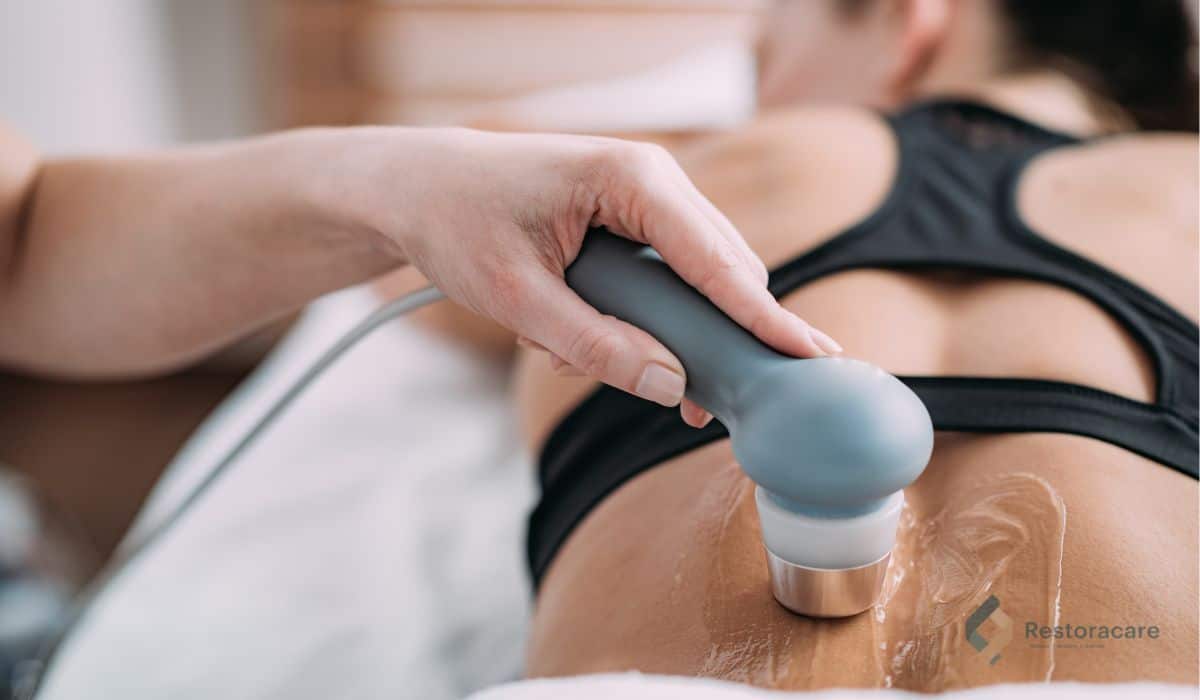
- A transducer head, which looks like a small wand
- A gel that’s applied to the patient’s skin to help the sound waves travel better
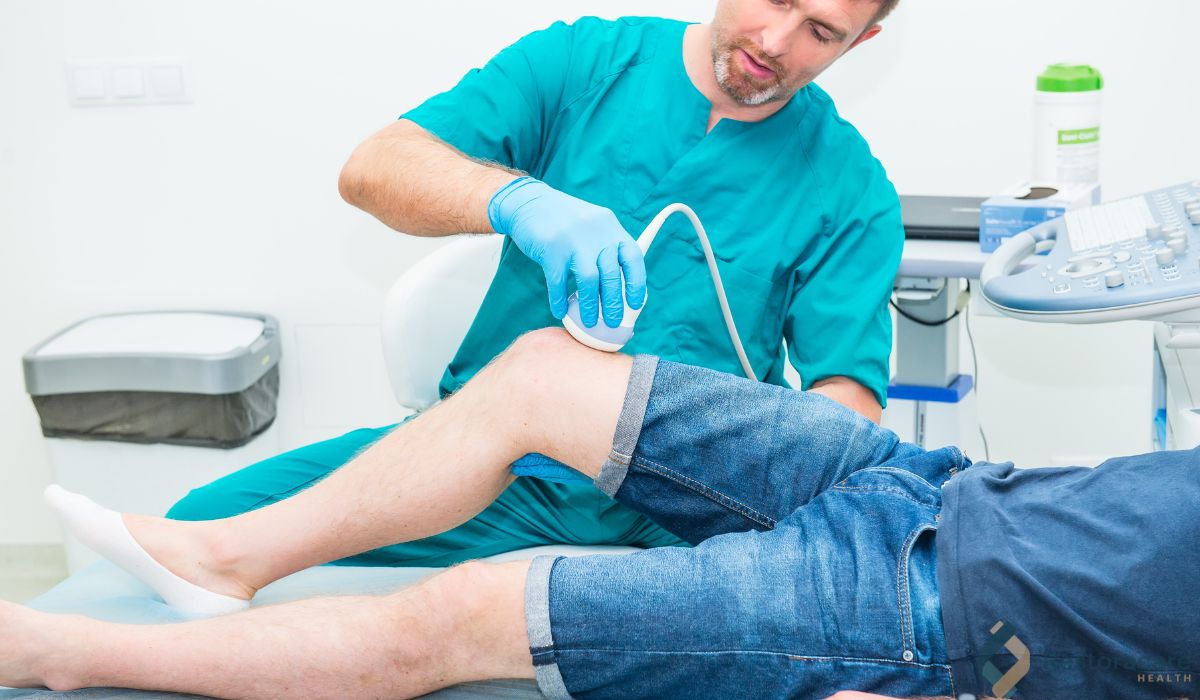
Once the gel is applied, the transducer head moves in slow circles over the treatment area. The sound waves go beneath the surface, reaching deep muscles that are often hard to treat with other methods.
Everything stays on the outside. Ultrasound is a noninvasive and generally safe procedure that’s generally painless, too.
There are different types of ultrasound used in therapy:
- Low intensity ultrasound is gentle and often used for long-term healing
- Focused ultrasound targets a specific treatment area more deeply, which can help with scar tissue or tough-to-reach spots

We’ve worked with many patients who came in feeling stuck or unsure where to turn next. Once they understood how ultrasound waves support recovery without pills or needles, they felt more confident in their care plan.
If you’re managing chronic pain, especially in muscle tissue or joints, this type of treatment can be a helpful part of your routine.
Therapeutic Vs Diagnostic Ultrasound: What’s The Difference?
| Feature | Therapeutic Ultrasound | Diagnostic Ultrasound |
| Purpose | Promote healing, reduce pain, increase blood flow | Visualize internal organs, tissues, fetus |
| Frequency Range | Typically 1–3 MHz (some devices span 0.7–3.3 MHz) | Generally 2–18 MHz (up to 30 MHz in special applications) |
| Primary Use | Musculoskeletal therapy, soft tissue healing | Diagnostic imaging |
| Procedure Type | Noninvasive therapeutic application | Noninvasive imaging scan |
| Administered By | Physical therapist, occupational therapist | Radiologist or sonographer |
| Equipment | Therapeutic ultrasound device with gel and transducer head | Imaging machine with probe and monitor |
| Sensation | Mild warmth or tingling from deep heat | Minimal or no sensation |
| Typical Duration | 5–15 minutes per treatment area | 15–60 minutes, depending on exam |

Therapeutic Ultrasound Applications: Treating Chronic Pain And Soft Tissue Injuries
Many people live with pain that lingers longer than expected. Therapeutic ultrasound offers a way to ease that discomfort, especially when it comes from chronic pain conditions, tight muscles, or soft tissue injuries.
This type of therapy targets the body in a focused and gentle way.
Ultrasound treatment is used to help manage different types of chronic pain. It’s commonly used for:
- Knee pain, often caused by strain, arthritis, or previous injuries
- Shoulder pain, including frozen shoulder and rotator cuff issues
- Neck pain, usually from tension or posture-related stress
- Muscle spasms and tight muscles, which can reduce flexibility and range of motion
These conditions can affect daily life. Simple tasks like walking, reaching, or sleeping can become difficult.
Treatment with ultrasound waves supports pain relief by improving circulation, loosening up the tissue, and reducing sensitivity in the affected area.
One of the major benefits is how ultrasound therapy helps in promoting soft tissue healing. The energy from the sound waves increases activity in the cells responsible for repair.
This helps the body recover faster from soft tissue damage, especially after sprains, strains, or minor sports injuries. It’s also used to treat injuries from overuse.
A number of clinical studies and reviews have looked at how effective this therapy is. A systematic review published in J Ultrasound Med highlighted how therapeutic ultrasound applications are useful in managing pain and speeding up tissue healing.
Results vary based on the condition, but many patients see gradual improvement over a series of sessions.
Still, ultrasound treatment isn’t the right fit for everyone. Some situations where it should be avoided include:
- Active infection in the treatment area
- Superficial burns or open wounds
- Certain injuries where heat or vibration might make things worse
Pain management through ultrasound therapy should always be tailored to your specific needs. That’s why working with a physical therapist or occupational therapist is important.
They ensure the treatment is safe, effective, and fits well within your overall chronic pain management plan.

The Science Behind Benefits: Improving Circulation And Reducing Inflammation
There’s a lot happening under the surface during ultrasound therapy. It’s not just about applying gel and moving a device across your skin. The real impact comes from what the sound waves are doing deep inside the body tissue.
One of the most important effects of ultrasound waves is the way they help increase blood flow. When the waves reach the target area, they gently stimulate circulation. Better circulation means more oxygen and nutrients are delivered to the tissue.
This helps damaged areas recover faster.
The treatment also generates deep heat. It’s not like the surface heat from a warm pack. This one works below the skin, reaching the muscle tissue without affecting the outer layers too much.
That warmth helps relax tight areas and prepare the body for movement or physical therapy.
Here’s what ultrasound treatment can help with:
- Reducing swelling in sore or injured areas
- Breaking down scar tissue that limits mobility
- Easing pain in joints, muscles, and connective tissues
All of this happens through the mechanical action of the sound waves. That movement affects tissue fluids and boosts activity at the cellular level. Over time, this supports the non invasive healing process.
It works without surgery or needles, making it easier to fit into your regular care routine.
Therapeutic ultrasound is often used when the body needs a nudge to repair itself. It helps keep things moving, both in your tissues and in your recovery plan.
And while every case is different, the goal stays the same: helping you move with less discomfort and more confidence.
Ready to Feel Better?
What To Expect During Your Ultrasound Treatment Session
If it’s your first time trying ultrasound therapy, don’t worry. The entire process is straightforward, gentle, and focused on your comfort from start to finish.
It usually begins with a consultation. A physical therapist or occupational therapist will ask about your symptoms, medical history, and goals. They’ll assess the treatment area and decide how ultrasound treatment fits into your care plan.
This step helps make sure the therapy is safe for your condition and works well with any other treatments you’re receiving.
Once the plan is set, the actual session begins. Here’s what it typically includes:
- Preparation of the treatment area, which may involve cleaning the skin and applying gel
- Direct contact of the ultrasound probe on your skin using slow, steady motions
- Adjustments to intensity, duration, and settings based on your needs and comfort
The entire procedure is a noninvasive and generally painless experience. Most people report feeling either a mild warmth or no sensation at all. If anything feels uncomfortable, it’s okay to speak up.
The therapist can make changes during the session to keep you at ease.
Sessions usually last between 5 to 15 minutes, depending on the size and depth of the target area. Treatment may happen several times a week, especially early on.
Many clinics include ultrasound therapy as part of a larger physical therapy program to help improve movement and speed up recovery.

As the sessions continue, people often notice gradual improvements, like less stiffness, or a bit more ease with everyday tasks. These small changes build over time.
With consistent care, the goal is to improve mobility and support long-term pain management.
Final Thoughts
Finding relief from chronic pain doesn’t have to mean complicated treatments or heavy medications. Ultrasound therapy offers a safe, simple option that supports soft tissue healing, reduces discomfort, and helps you move with more ease.
If you’re in Toronto and ready to explore how this can fit into your recovery, give Restoracare Health a call at (416) 901-2873, visit our homepage, or book a session to experience the benefits of pain management through ultrasound therapy for yourself.
Frequently Asked Questions
Is Therapeutic Ultrasound Safe for Everyone?
It’s considered generally safe, but there are a few exceptions. People with active infections, superficial burns, or certain health conditions should avoid it unless cleared by a healthcare professional.
How does Ultrasound Therapy Help Treat Chronic Pain?
It uses ultrasound waves to increase blood flow, reduce swelling, and support the body’s natural tissue healing process. Over time, this can ease stiffness and pain in muscles and joints.
How Many Sessions are Needed Before Feeling Results?
Some people notice changes after a few treatments. For ongoing chronic pain management, results often build up over several consistent sessions.
Can Ultrasound Therapy be Combined with Other Treatments?
Yes, it’s often used alongside physical therapy, pain medicine, and other recovery plans. A therapist can help coordinate the best combination for your needs.