

Canada has kept its ultrasound intensity cap at 3 watts per square centimetre since 1981. And there’s a reason for that: it’s actually a safeguard to protect patients from tissue damage during therapeutic use.
This long-standing national standard reflects how seriously safety and effectiveness are treated in the professional practice in ultrasound therapy in Toronto.
From our experience, patients are often curious but unsure about what ultrasound treatment actually involves, who’s qualified to provide it, and how it fits into a larger recovery plan. That’s exactly what this article aims to unpack.
You’ll get a clearer picture of how ultrasound therapy works, what happens during a session, and what credentials physical therapists need in Canada to offer this treatment safely and professionally.
If you’re exploring modern ultrasound therapy technology, we covered that in our previous post. Up next, we’ll walk through the wide range of ultrasound therapy applications across physical rehabilitation and chronic pain care. For the full breakdown of how ultrasound therapy fits into today’s physical therapy practices, our main guide pulls it all together.
Key Points
- Ultrasound therapy supports healing and pain relief by using targeted sound waves on soft tissues.
- It’s used in rehabilitation medicine for injuries, chronic pain, and recovery from surgery.
- Therapeutic ultrasound differs from diagnostic ultrasound, which is for imaging, not treatment.
- In Canada, physical therapists follow strict standards and training under a competency based education model.
- Treatments are safe when provided by qualified professionals and are often paired with manual therapy or active rehab.
- Clinical studies support its use in musculoskeletal ultrasound for conditions like chronic low back pain, arthritis, and post-injury care.
- Ultrasound devices used today are regulated, evidence-based, and tailored to each patient’s needs.
- Clinics work alongside other health professions, following protocols for clinical and research purposes and quality assurance.
Understanding Ultrasound Therapy in Clinical Practice
Ever heard of ultrasound and thought of baby pictures? That’s diagnostic ultrasound. It creates images. Therapeutic ultrasound is different. It uses sound waves to heal. These waves gently vibrate your soft tissues.
Think muscles, tendons, ligaments. This vibration creates tiny amounts of heat deep inside. What does this do? It boosts blood flow. More blood brings more oxygen and nutrients. It helps reduce swelling. It encourages the body’s natural repair process. Healing gets a helpful nudge.
Therapeutic ultrasound is widely applied in rehabilitation medicine to support patient recovery in several well-established ways.

- First, it can help speed up tissue repair after injury by increasing blood flow and stimulating cellular activity.
- Second, it plays a role in reducing inflammation and swelling, which is especially useful in treating soft tissue conditions.
- Third, it is commonly used to ease muscle spasms and stiffness, often in conjunction with manual therapy techniques.
- Fourth, a more specialised use—phonophoresis—involves enhancing the absorption of medications through the skin using ultrasound waves.
Journals like the Archives of Physical Medicine and Rehabilitation and the Journal of Orthopaedic & Sports Physical Therapy regularly explore these clinical applications and their evolving role in evidence-based physical therapy practice.
Ready to Feel Better?
Professional Practice in Ultrasound Therapy: Standards and Training in Canada
Who can perform this therapy safely? Only trained professionals. In Canada, physical therapists are the primary providers. Their education is rigorous. It follows a competency based educational model.
This means students must prove they can do the skills safely and effectively, not just know the theory. Programs in allied health sciences faculties prepare them thoroughly.
You’ll find excellent programmes at places like the University of Toronto, McMaster University, and the University of British Columbia.
Learning doesn’t stop after graduation. Extensive clinical supervision is required initially. New therapists are closely guided. Their skills are assessed using valid measure criteria. This ensures patient safety and treatment quality.
What about professional scope? Physical therapists in Ontario, Alberta, and all other Canadian provinces are fully licensed to use therapeutic ultrasound within their pt’s scope.
Regulations are clear, like those from the College of Physiotherapists of Ontario and the Canadian Alliance of Physiotherapy Regulators.
Staying current is crucial. Continuing education is mandatory for maintaining a license. While foundational training is solid, some seek advanced training recommendations in specific ultrasound therapy applications.
Opportunities exist, though finding specialised courses can sometimes be challenging. This commitment to lifelong learning ensures high standards in professional practice in ultrasound therapy.

Evidence-Based Use and What to Expect in a Therapy Session
Most people don’t know what to expect before their first ultrasound therapy session. That’s normal. The process is simple, but there’s a lot of science behind how and why it works.
Clinical studies, reviews, and practical feedback from real patients all help guide what happens in the treatment room.
Recent randomised clinical trials and systematic reviews have looked at how musculoskeletal ultrasound can reduce symptoms tied to chronic low back pain, tendonitis, and joint issues.
Studies show ultrasound therapy can help increase blood flow and support healing in musculoskeletal ultrasound care. It’s especially effective when paired with active rehab in conditions like chronic low back pain and osteoarthritis.
This type of ultrasound therapy is commonly recommended for:
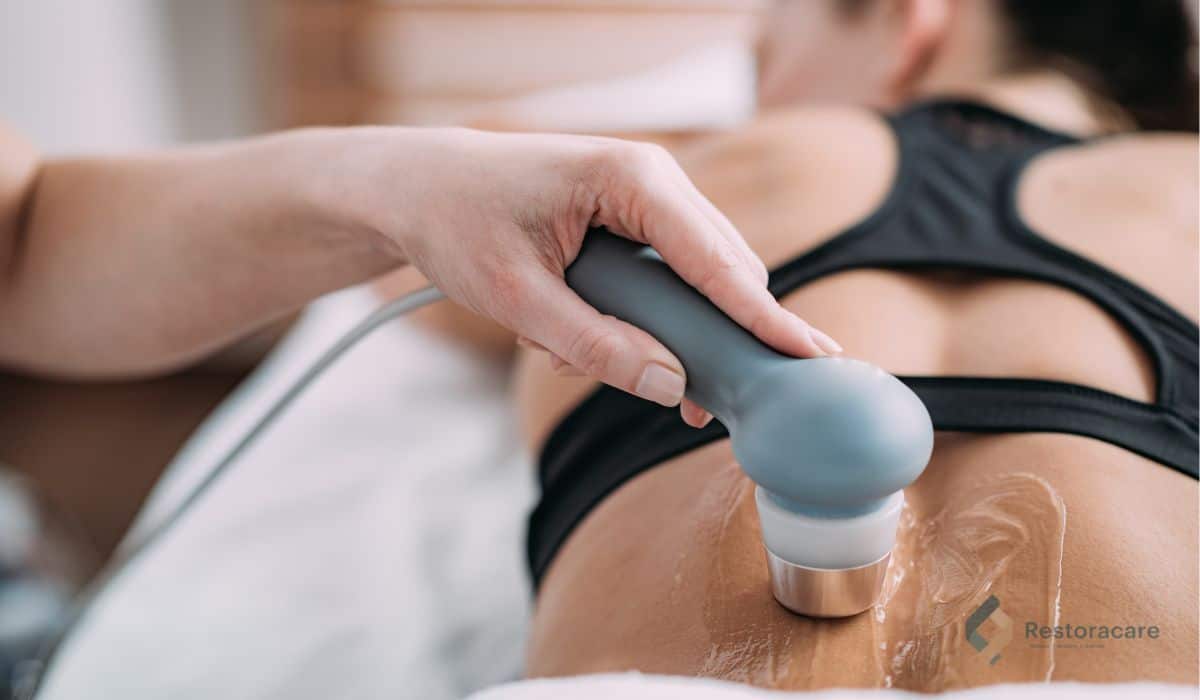
During a session, a trained therapist applies gel over the affected area to help sound waves reach the soft tissues. You’ll feel warmth, maybe a bit of vibration. Sessions usually last between 5 and 10 minutes per targeted region, depending on the goal of your care plan.
There are a few cases where ultrasound therapy should be avoided. These include:
Each treatment is customised. Safety checks are done every time to make sure risk is low. That’s part of what makes this a trusted tool in physical therapy practice.
And if you’re wondering how it compares to imaging, here’s the difference: Therapeutic ultrasound delivers sound waves to treat. Diagnostic ultrasound sends sound waves to create pictures.
The purpose, equipment, and training are all different. One supports healing. The other helps with medical diagnosis.

Working Together: Multidisciplinary Healthcare and Quality Care
Ultrasound therapy doesn’t stand alone. It often works best as part of a team approach. That’s because pain and injury affect more than just one system or structure. The best outcomes usually happen when multiple professionals are part of the plan.
Here’s where this therapy fits in:
In some clinics, we work directly with orthopedic sports physical therapy specialists. Others collaborate through shared care models. The goal is the same: to help patients recover safely, using tools backed by clinical research.
Clear communication matters. That includes:
We also follow ongoing quality assurance measures. It’s part of how health professions stay accountable and patient-focused. These checks help ensure safe use of ultrasound devices, proper documentation, and alignment with national practice standards.
The Canadian Institutes of Health Research (CIHR) encourages this kind of coordination. And if therapy is ever part of a formal study, we rely on guidance like the ICMJE uniform disclosure forms to make sure everything’s ethical and transparent.
A well-rounded recovery often involves more than one voice. Ultrasound therapy plays a supporting role in a broader system built on trust, education, and shared goals.

Final Thoughts
Getting care that’s backed by research and delivered by trained professionals makes a real difference. Ultrasound therapy isn’t a one-size-fits-all tool, but when used properly, it can support healing, ease pain, and improve movement.
At Restoracare Health, we follow current standards and stay up to date with what works. If you’re looking for guidance or curious about how this fits into your recovery, we’re here to help. You can explore our services or get in touch anytime through our homepage.